Physical Address
304 North Cardinal St.
Dorchester Center, MA 02124
Physical Address
304 North Cardinal St.
Dorchester Center, MA 02124

Nourish Better, Live Fuller
Nourish Better, Live Fuller
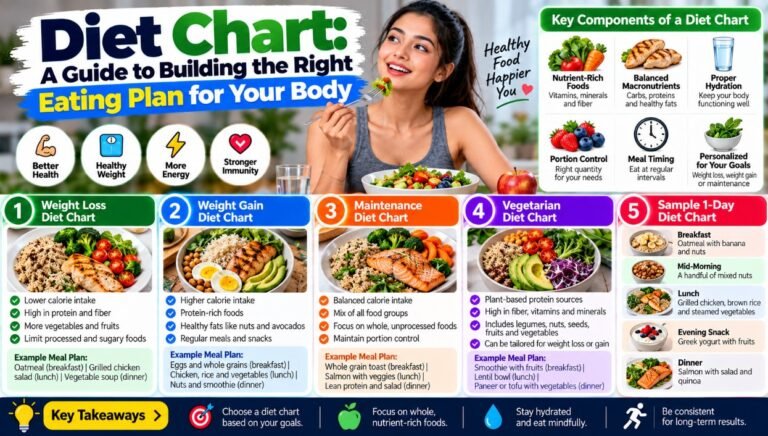
Most people search for a diet chart because they feel stuck. They want to lose weight, gain energy, or just eat better, but they don’t know where to start.
A good diet chart is not about starving yourself or cutting out your favourite foods. It’s about eating the right amount of the right foods at the right time. When your meals are planned well, your body works better. You feel less tired. Your digestion improves. Your weight becomes easier to manage.
This guide gives you a complete, practical diet chart built for Indian foods and daily routines. You’ll learn how to plan your meals, what to eat at each meal, and how to adjust the plan based on your goal — whether that’s weight loss, weight gain, or general health.
No fancy jargon. No impossible rules. Just a plan you can actually follow.

A diet chart is a structured plan that tells you what to eat, how much to eat, and when to eat it. It usually covers your entire day — from the moment you wake up to the time you go to bed.
Think of it as a roadmap for your meals. Without one, most people eat randomly. They skip breakfast, overeat at dinner, and snack on junk food out of boredom. A diet chart removes that guesswork.
Here’s why a diet chart actually matters:
A diet chart isn’t a punishment. It’s a tool. And like any tool, it works best when it fits your lifestyle instead of fighting against it.
Learn More: DIET Full Form
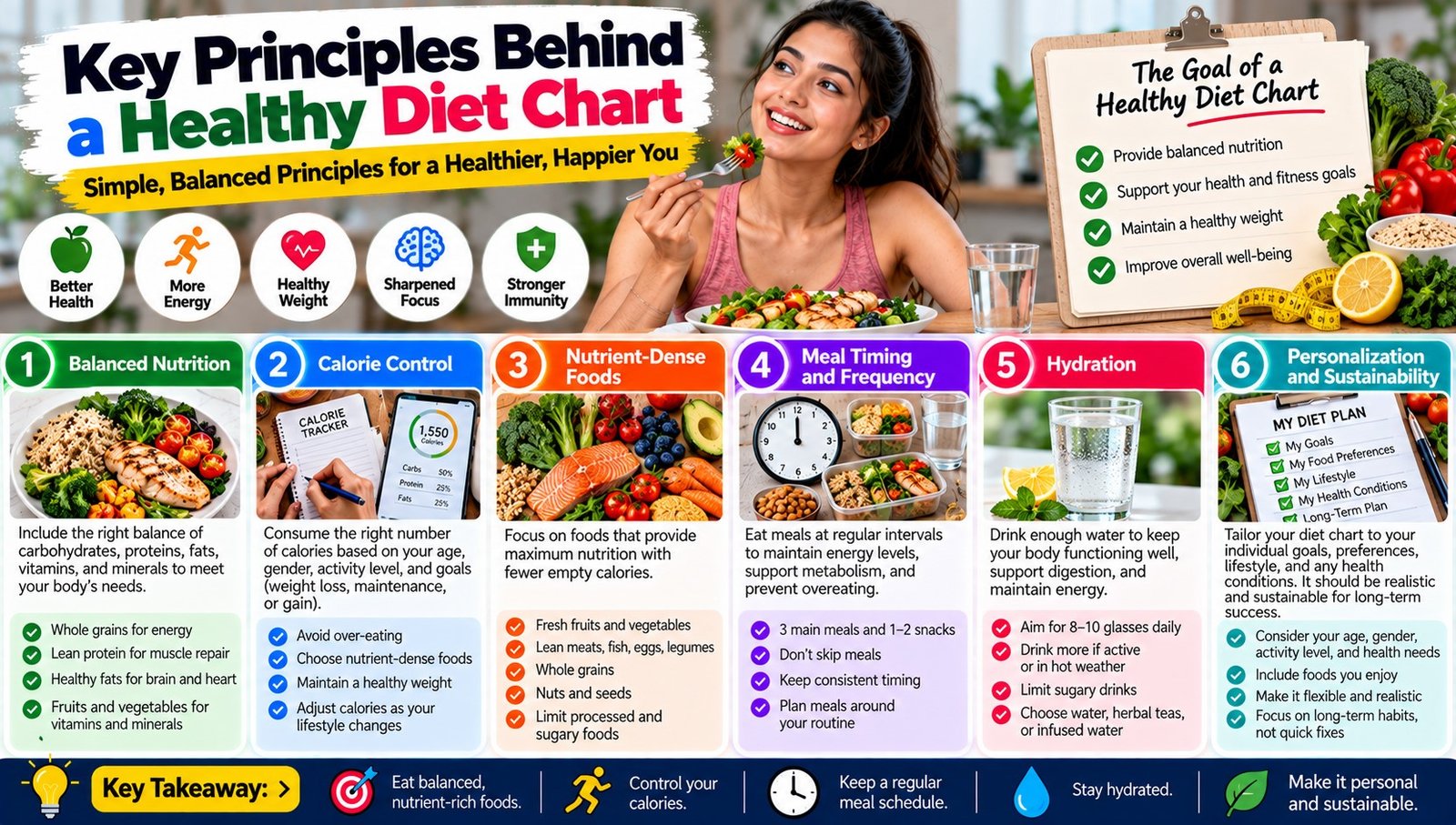
Before jumping into sample charts, it helps to understand the logic behind them. A diet chart built on solid principles will always outperform one copied blindly from the internet.
Every meal should ideally have three things: protein, complex carbohydrates, and healthy fats. Protein keeps you full and supports muscle repair. Complex carbs give you steady energy. Healthy fats support your hormones and brain function.
Skipping meals, especially breakfast, often backfires. It leads to overeating later in the day and can slow down your metabolism over time.
You don’t need to completely remove rice, roti, or sweets from your life. What matters is how much you eat, not just what you eat.
Many people confuse thirst with hunger. Drinking enough water throughout the day — around 2.5 to 3 litres for most adults — helps control unnecessary snacking.
Eating dinner at least 2–3 hours before bedtime gives your body time to digest properly and can improve sleep quality.
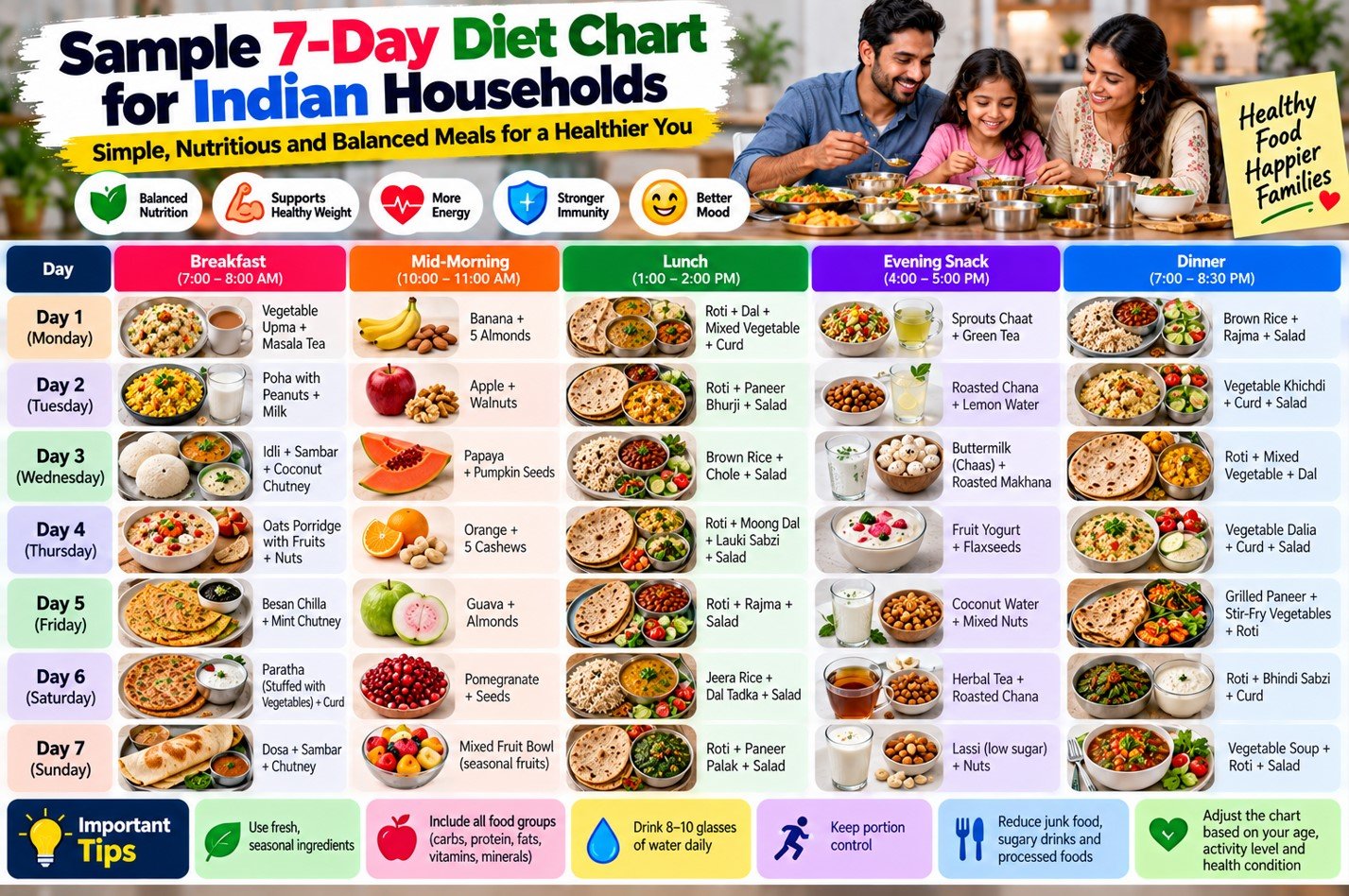
This chart uses common, easily available Indian foods. It’s designed for a moderately active adult and can be adjusted up or down based on your calorie needs.
Early Morning (6:30–7:00 AM): 1 glass warm water with lemon, 4–5 soaked almonds
Breakfast (8:00–8:30 AM):
Mid-Morning Snack (11:00 AM): 1 seasonal fruit (apple, papaya, or guava)
Lunch (1:00–1:30 PM):
Evening Snack (4:30–5:00 PM): Roasted chana or makhana, 1 cup green tea
Dinner (7:30–8:00 PM):
Before Bed (9:30 PM): 1 cup warm turmeric milk (optional)
This structure keeps meals spaced every 3 hours, which helps maintain steady energy and prevents overeating.

Weight loss happens when you consistently eat fewer calories than your body burns. But that doesn’t mean starving — it means eating smarter.
This kind of plan creates a natural calorie deficit without leaving you hungry, because protein and fibre keep you satisfied longer.

Weight gain, when done correctly, focuses on muscle, not just fat. This means eating in a calorie surplus while prioritising protein and strength training.
Consistency matters more than intensity here. Eating slightly more, every single day, works better than one huge meal occasionally.
Click Here: Diet Coke in India
| Factor | Weight Loss Chart | Weight Gain Chart | General Health Chart |
| Daily Meals | 5–6 small meals | 5–6 meals with extra snacks | 4–5 balanced meals |
| Protein Focus | High | Very High | Moderate |
| Carb Portion | Reduced | Increased | Balanced |
| Fat Intake | Limited, healthy fats only | Higher, includes ghee/nuts | Moderate |
| Best For | Fat loss, toning | Muscle gain, underweight individuals | Everyday wellness |
| Exercise Pairing | Cardio + light strength training | Strength training | Any regular activity |

You don’t have to remove these completely from your life. Limiting them to occasional treats is more sustainable than banning them forever.
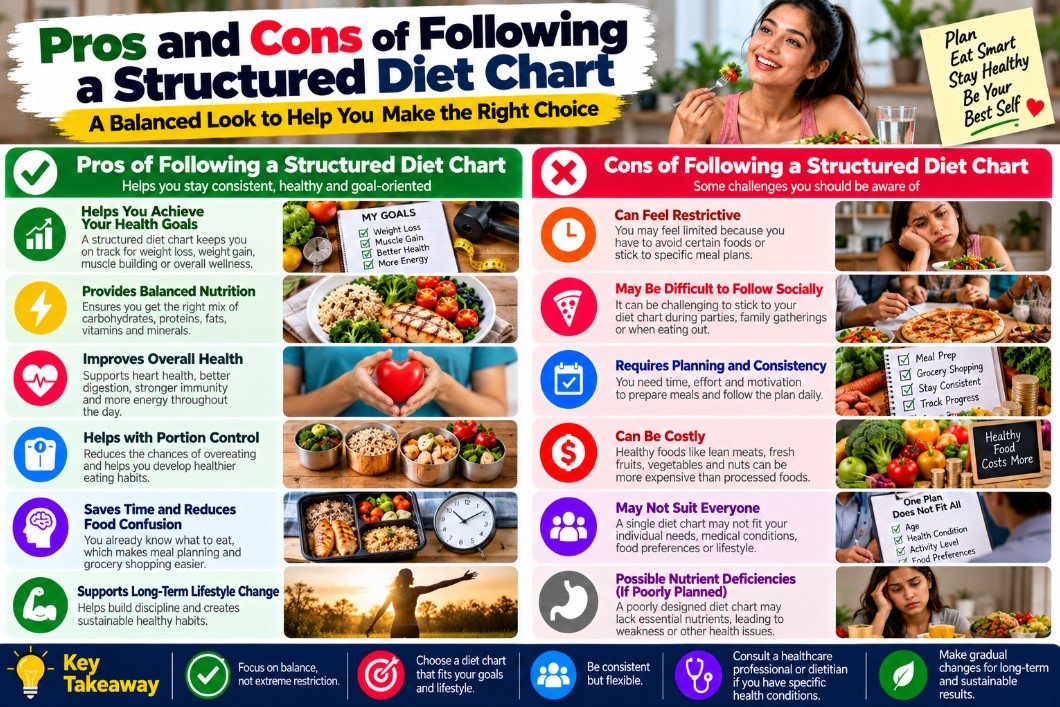

Even with the best diet chart, people often go wrong in a few predictable ways.
Copying someone else’s chart exactly. Your body, activity level, and health conditions are different from anyone else’s. A chart should be a starting template, not a fixed rulebook.
Ignoring hunger and fullness cues. Some people force themselves to finish every bite on their chart even when full, while others undereat and feel weak.
Overcomplicating meals. A diet chart doesn’t need exotic ingredients. Simple, home-cooked Indian meals work perfectly well.
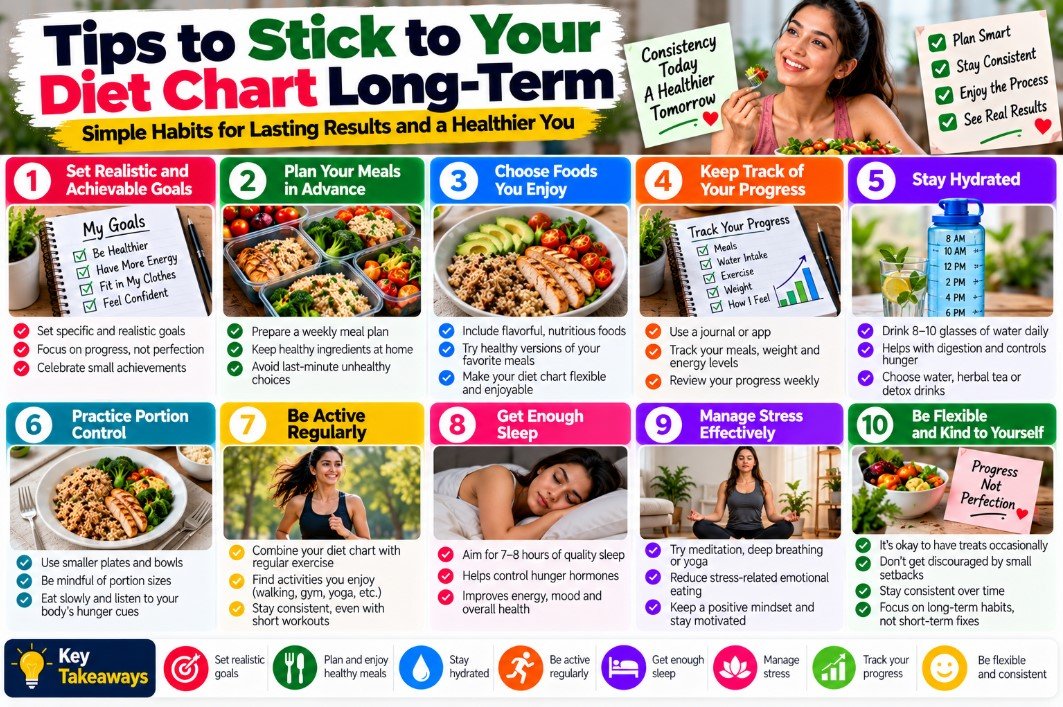
Giving up after one bad day. One day of overeating doesn’t undo progress. Consistency over weeks matters far more than perfection on a single day.
Not adjusting for festivals or travel. Real life happens. A rigid chart that doesn’t allow flexibility usually gets abandoned completely.
Click Now: Weight Gain Diet Plan
A simple chart with three main meals and two small snacks, focused on whole grains, protein, and vegetables, works well for most beginners.
Most effective diet charts include 5 to 6 meals — three main meals and two to three small snacks spaced roughly 3 hours apart.
Yes, a diet chart alone can support weight management, but combining it with regular physical activity gives faster and more sustainable results.
Skipping breakfast isn’t recommended for most people, as it often leads to overeating later and can affect energy levels throughout the day.
Visible changes usually appear within 3 to 4 weeks of consistent following, though individual results vary based on metabolism and activity level.
Yes, calorie and protein needs generally differ between men and women, so portion sizes should be adjusted accordingly.
A well-structured diet chart can support management of these conditions, but it should be created or reviewed by a doctor or registered dietitian for medical accuracy.
Not always. A balanced, portion-controlled chart can work without strict calorie counting, though tracking can help for specific goals like fat loss.
Absolutely. The core principles — balanced macros, portion control, and meal timing — apply to any regional cuisine, including South Indian, Bengali, Punjabi, or Gujarati food.
Replace it with a similar food from the same category. For example, swap paneer for eggs or tofu if you need a different protein source.
A diet chart works best when it’s built around your real life, not an idealised version of it. Whether your goal is weight loss, weight gain, or simply eating better, the foundation stays the same: balanced meals, proper portions, and consistent timing.
Start small. Pick one meal to fix this week, then build from there. Over time, these small, consistent changes add up to real, lasting results — without the stress of a rigid, unrealistic plan.
If you have specific health conditions like diabetes, thyroid issues, or PCOS, it’s always best to get your diet chart reviewed by a registered dietitian or doctor for personalised guidance.


