Physical Address
304 North Cardinal St.
Dorchester Center, MA 02124
Physical Address
304 North Cardinal St.
Dorchester Center, MA 02124

Nourish Better, Live Fuller
Nourish Better, Live Fuller

The first three months of pregnancy set the foundation for your baby’s growth. During this period, your body goes through rapid hormonal changes, and your baby’s brain, spine, and vital organs begin to form. This is why a well-planned 1 to 3 month pregnancy diet chart matters so much.
Many expecting mothers in India struggle with nausea, food aversions, and confusion about what to eat during early pregnancy. This guide breaks down exactly what to include in your daily meals, which nutrients your body needs most, and how to build a diet chart using simple, easily available Indian foods.
This article is written for expecting mothers who want practical, easy-to-follow nutrition guidance without medical jargon. Always confirm your specific dietary needs with your gynecologist or a registered dietitian, since every pregnancy is different.

Weeks 1 to 12 form what doctors call the first trimester, and it is the most critical window for your baby’s development. During this time, the neural tube, heart, and other major organs begin forming. Poor nutrition during this period can affect fetal development, while balanced nutrition supports healthy growth and reduces pregnancy complications.
Your body also needs extra support to handle hormonal shifts, blood volume increase, and the physical demands of carrying a baby. Even though your baby is still tiny, the nutritional choices you make now have long-term effects.
Unlike later trimesters, you don’t need significantly more calories in the first three months. What matters more is nutrient density—getting the right vitamins and minerals rather than simply eating more food.
Click Now: DIET Full Form

Before building your diet chart, it helps to understand which nutrients deserve the most attention.
Folic acid is the single most important nutrient in early pregnancy. It helps prevent neural tube defects in the baby’s brain and spine. Doctors usually recommend 400–600 mcg per day, often through supplements along with food sources.
Good sources: spinach, moong dal, oranges, fortified cereals, beetroot
Iron supports the increased blood volume in your body and prevents anemia, which is common among Indian women during pregnancy.
Good sources: jaggery, spinach, pomegranate, dates, ragi
Calcium supports the early development of your baby’s bones and teeth while protecting your own bone density.
Good sources: milk, curd, paneer, sesame seeds, ragi
Protein supports tissue growth and placenta development.
Good sources: dals, eggs, paneer, milk, sprouts, chicken (if non-vegetarian)
This nutrient helps reduce nausea and supports brain development in the fetus.
Good sources: bananas, oats, chickpeas, potatoes
Iodine supports thyroid function, which directly affects fetal brain development.
Good sources: iodized salt, dairy products, curd
Adequate water intake supports amniotic fluid levels and reduces constipation, a common first-trimester complaint.
Target: 8–10 glasses of water daily, more if experiencing vomiting
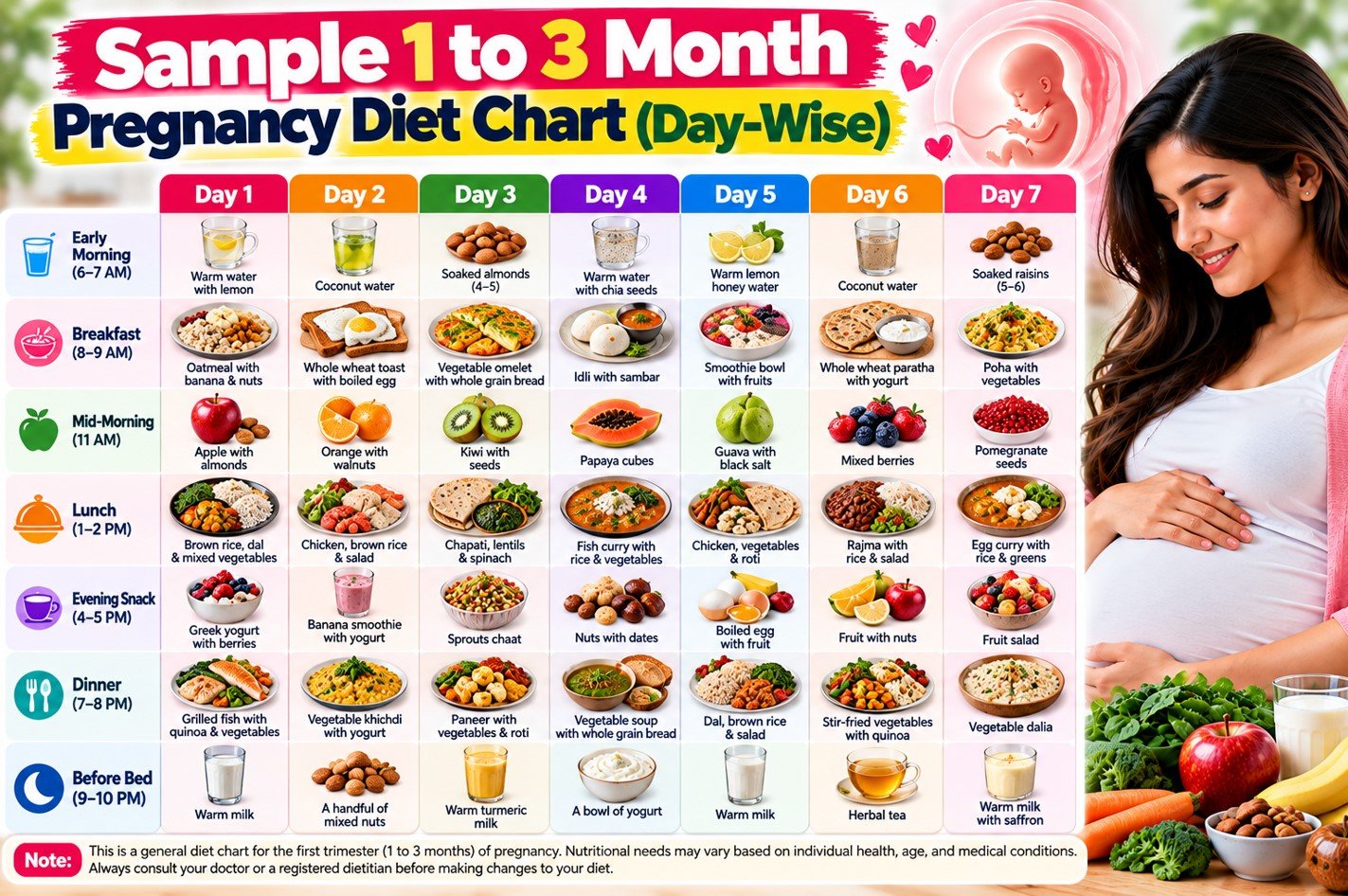
Here is a practical, easy-to-follow diet chart using foods commonly available across Indian households. Adjust portion sizes based on your appetite, especially if nausea is affecting your eating pattern.
Note: If you’re experiencing severe nausea, smaller and more frequent meals (every 2–3 hours) work better than three large meals.
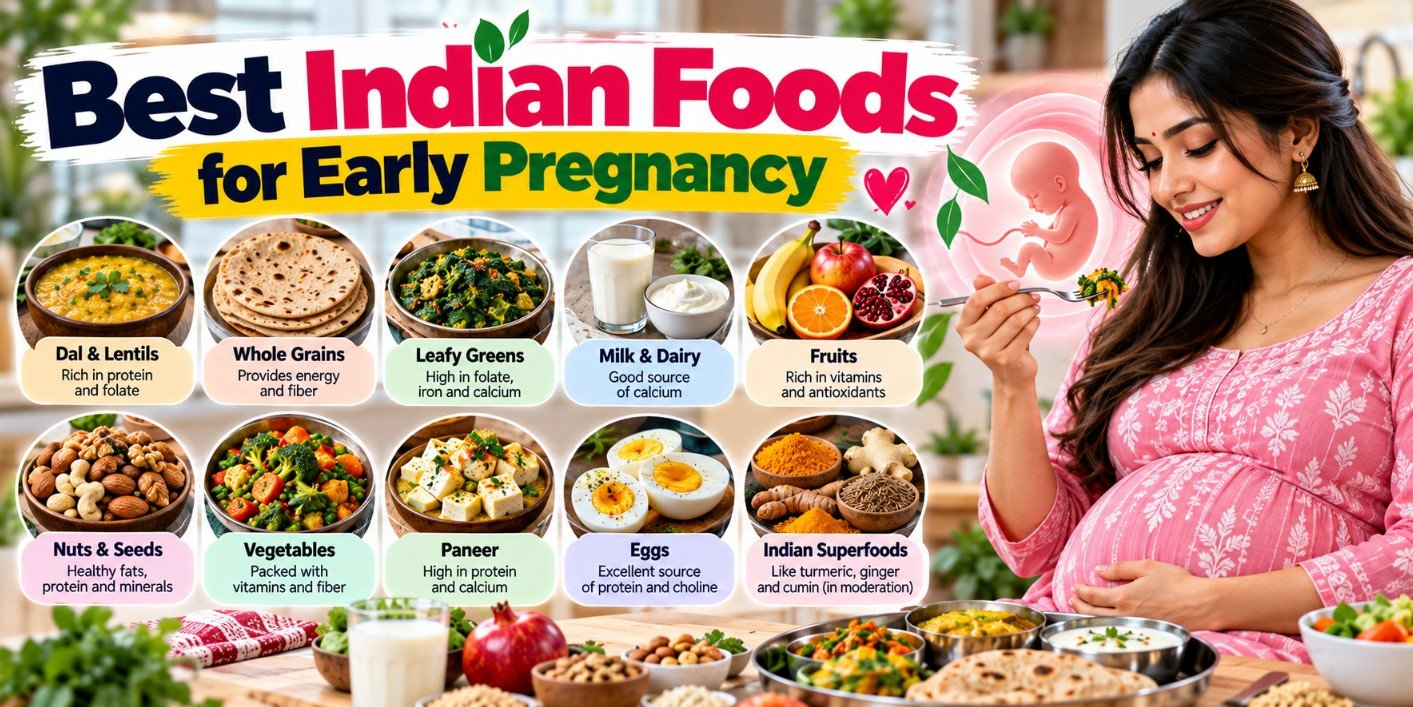
These commonly available foods offer excellent nutritional value for the first trimester:
Click Here: Weight Gain Diet Plan

Certain foods and habits can pose risks during the first trimester and should be limited or avoided completely.

Morning sickness affects most women during the first trimester. Small dietary adjustments can make a noticeable difference.
If vomiting is severe and you’re unable to keep food down, consult your doctor immediately, as this could indicate hyperemesis gravidarum, which needs medical attention.
| Nutrient | Month 1 Focus | Month 2 Focus | Month 3 Focus |
| Folic Acid | Highest priority for neural tube formation | Continued importance for brain development | Still essential, supplement usually continues |
| Iron | Moderate need begins | Blood volume starts increasing | Higher demand as placenta develops |
| Calcium | Supports early bone framework | Ongoing skeletal development | Teeth buds begin forming |
| Protein | Supports early cell division | Placenta and tissue growth | Organ development continues |
| Hydration | Manages early nausea | Prevents constipation | Supports amniotic fluid |

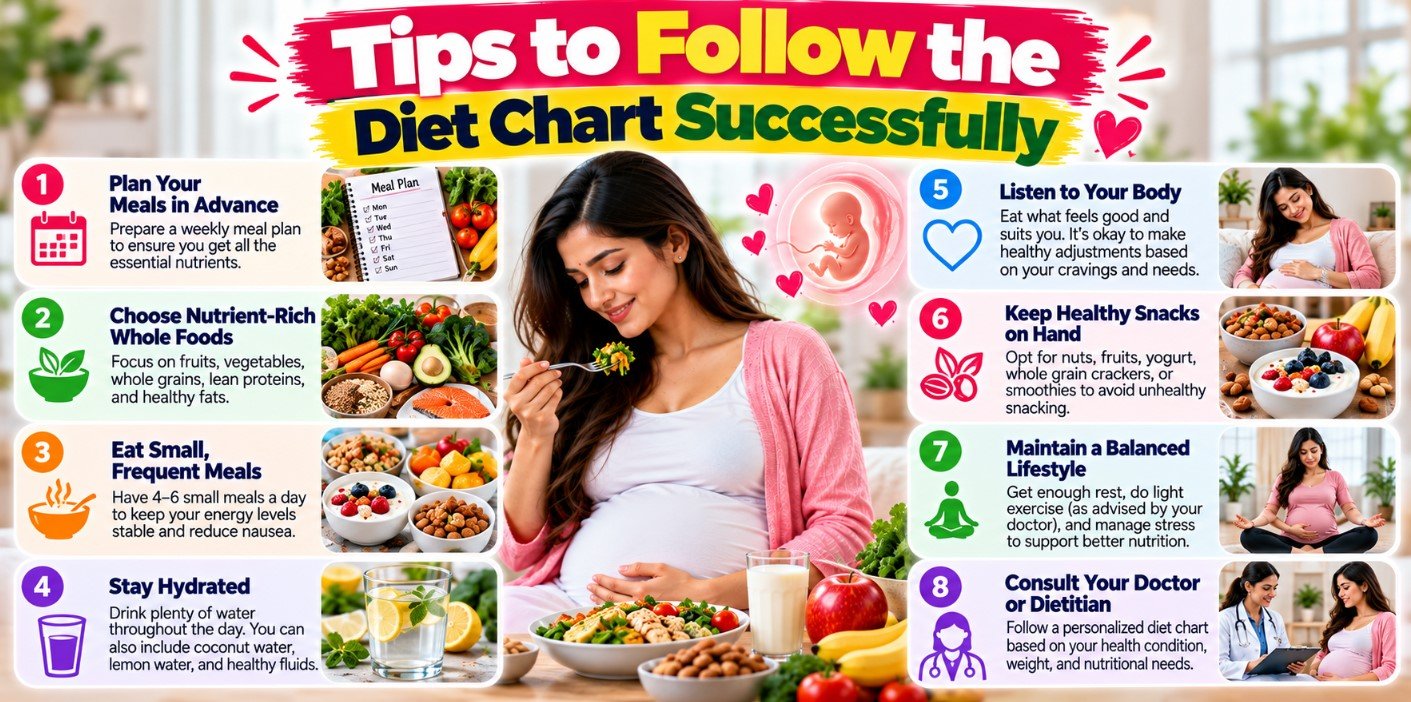
Best approach: Use a diet chart as a flexible guide rather than a strict rulebook, and adjust based on how your body responds.
Learn More: Diet Chart
Focus on folate-rich foods like spinach, moong dal, and oranges, along with your prescribed folic acid supplement. Keep meals light if you’re experiencing early nausea.
Yes, rice is safe and provides energy. Choose brown rice occasionally for added fiber, but white rice in moderation is also fine.
Ripe papaya in small amounts is generally considered safe, but unripe or semi-ripe papaya should be avoided as it contains latex, which may trigger uterine contractions.
Unlike later trimesters, the first trimester doesn’t require significant extra calories. Focus on nutrient quality rather than quantity.
Bananas, oranges, apples, and pomegranates are excellent choices for vitamins, fiber, and iron.
Limited caffeine (under 200 mg daily, roughly one cup) is generally considered safe, but check with your doctor for personalized advice.
Avoid raw eggs, unpasteurized dairy, alcohol, excess caffeine, unripe papaya, and high-mercury fish.
Eat small, frequent meals, keep dry crackers by your bedside, sip ginger tea, and avoid strong food smells.
Well-cooked chicken, fish (low-mercury varieties), and eggs are safe and provide good protein and iron. Avoid raw or undercooked options.
Most doctors prescribe folic acid, iron, and sometimes vitamin D or calcium supplements. Always follow your doctor’s specific recommendations alongside your diet.
A well-structured 1 to 3 month pregnancy diet chart doesn’t need to be complicated. Focus on nutrient-dense, easily digestible Indian foods, prioritize folic acid and iron, stay hydrated, and adjust your meals based on how your body responds to early pregnancy symptoms.
Every pregnancy journey looks different, so treat this chart as a flexible starting point rather than a strict rulebook. Pair it with regular checkups and guidance from your gynecologist to ensure both you and your baby stay healthy through this important first trimester.
This article is for general informational purposes only and does not replace professional medical advice. Always consult your doctor or a registered dietitian for guidance specific to your health and pregnancy.


